Woven Object
YEAR
2024
agency
Beyond
challenge
The AI was impressive, but the prototype was difficult to understand, hard to navigate, and wasn’t built around how cardiologists actually work.
Complex medical data that needed to be easy to interpret at a glance, not buried in dense interfaces
A clunky prototype that needed to become polished, scalable, and sellable across international markets
A gap between clinician needs and the client’s build that could only be closed with direct research and a more curated UX.
Approach
Learning the domain
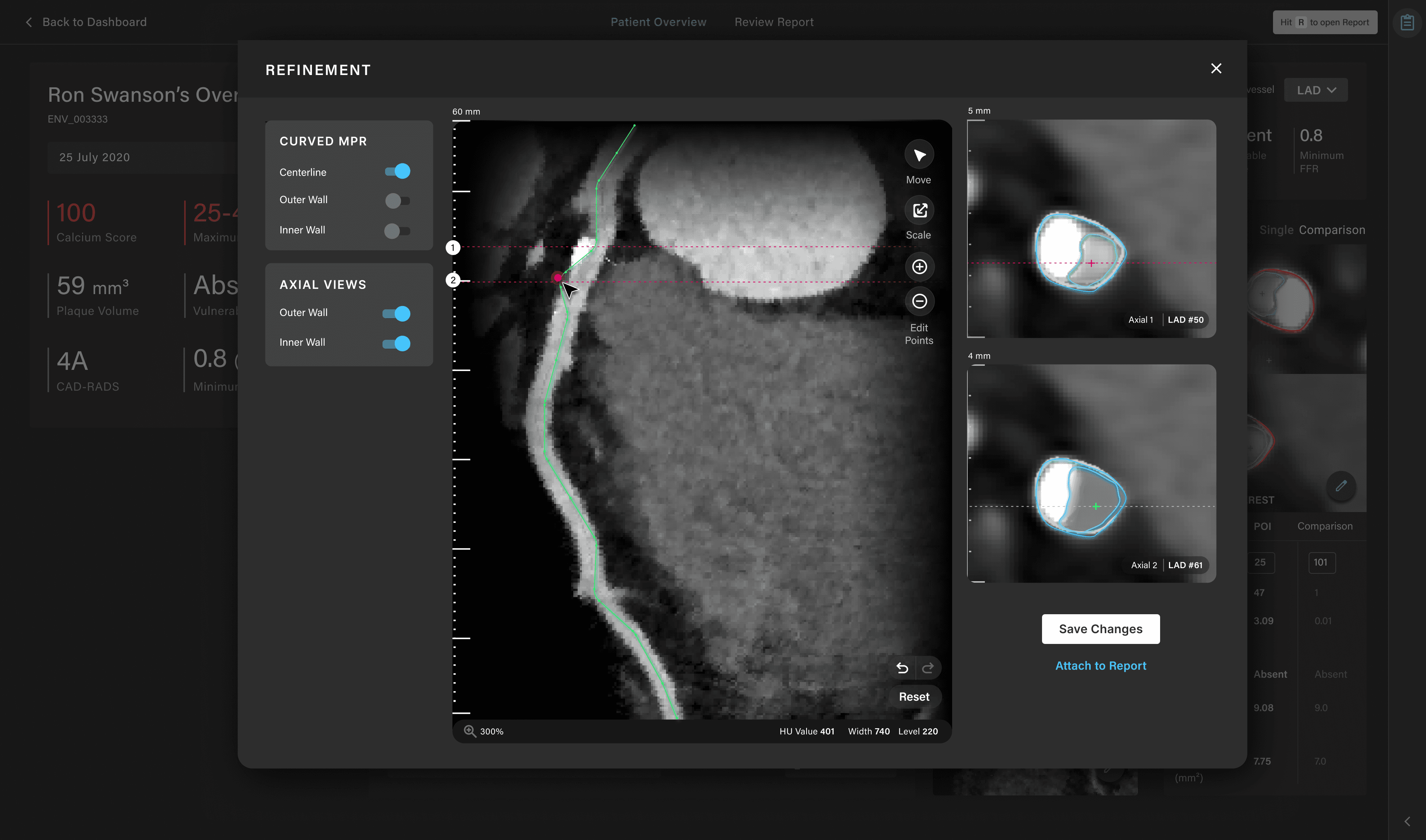
We interviewed cardiologists directly to understand what they need at each point in their diagnostic workflow. The client had the technical vision, but they didn’t have the direct insights into how clinicians actually read CT scans, what data they prioritize, and where existing tools slow them down. That research shaped every design decision that followed.
Redesigning the core product experience


Defining the Artrya brand
To further elevate the product, we created a visual identity to match the sophistication of the technology. Medical software shouldn't have to look like it was built in the 1990's (like the original prototype did). We intentionally used dark foundational colors paired with bright, neon accents to create contrast that draws the eye easily to key data and insights.
The brand needed to signal trust, confidence, precision, and modernity to both clinicians evaluating the tool and hospital procurement teams deciding whether to buy it. The brand work was a major factor in the product’s ability to expand into new markets.


Takeaway
Great technology alone doesn't sell. Artrya's AI was genuinely impressive—rapid cardiac disease detection that could save time, costs, and the need for invasive intervention. But that didn't necessarily mean it would be adopted at scale. In high-stakes, high-complexity technical domains, the designer's real job is making users immediately trust what they're using and delivering the type of value that makes skepticism an afterthought.