Meta Horizon Worlds

Turning a high drop-off loading screen into a moment people actually wanted to stick around for, with content and games.

Turning a high drop-off loading screen into a moment people actually wanted to stick around for, with content and games.

Loading times on Horizon Worlds mobile range from 7 to 45 or more seconds depending on the world's multiplayer complexity, network, and device. That variability creates the highest-risk moment in the session: users deciding whether to wait it out or bail.

The existing solution was looping video game trailers that users passively watched on repeat (it wasn’t working).

org

Engagement

role

Product Designer

year

2025

Mobile

Vibe coding

Prototyping

Visual design

Product strategy

Interaction design

Stakeholder management

Challenge

We're losing 1 in 4 users in some of our top Worlds due to load times.

Challenge

We're losing 1 in 4 users in some of our top Worlds due to load times.

4-9%

daily
abandonment rate

daily abandonment rate

45+ sec

45+ sec

45+ sec

average load for mobile deep linking

23-27%

abandonment rates in
top performing worlds

abandonment rates in top performing worlds

APPROACH

From passive to purposeful

Instead of looping trailers that users passively watched on repeat, I hypothesized that giving people something fresh to do or learn during the wait would reduce abandonment.

Key insight
New users, returning users, and power users all need different things during those seconds. A new player needs to learn the basics. A returning player needs social pull. A power user just needs to not feel like they’re waiting.
ITERATION 1

Interactive onboarding tutorial

Concept
Turn loading into onboarding. An interactive tutorial teaches controls and mechanics while the world loads, so users arrive ready to play instead of passively waiting.

Why it didn’t ship
Engineering lift was too high for the timeline. Tying onboarding to the loading window created conflicts with latency performance, and the solution didn’t scale across different user types.

What shipped instead
An in-game interactive tutorial that activated once players landed in the world. Moving onboarding inside the game eliminated the load-time engineering conflicts and gave us a flexible framework that adapted to different experience levels.

Learning
The best design solution isn’t always the first one. Decoupling onboarding from loading gave us something more resilient, more scalable, and actually shippable.

Initial prototype: educating users on gameplay to reduce loading wait time anxiety.
Shipped: Contextual new user experience shown upon first entry in a world, teaching them the basics of gameplay.

ITERATION 2

Curated contextual cards

Concept
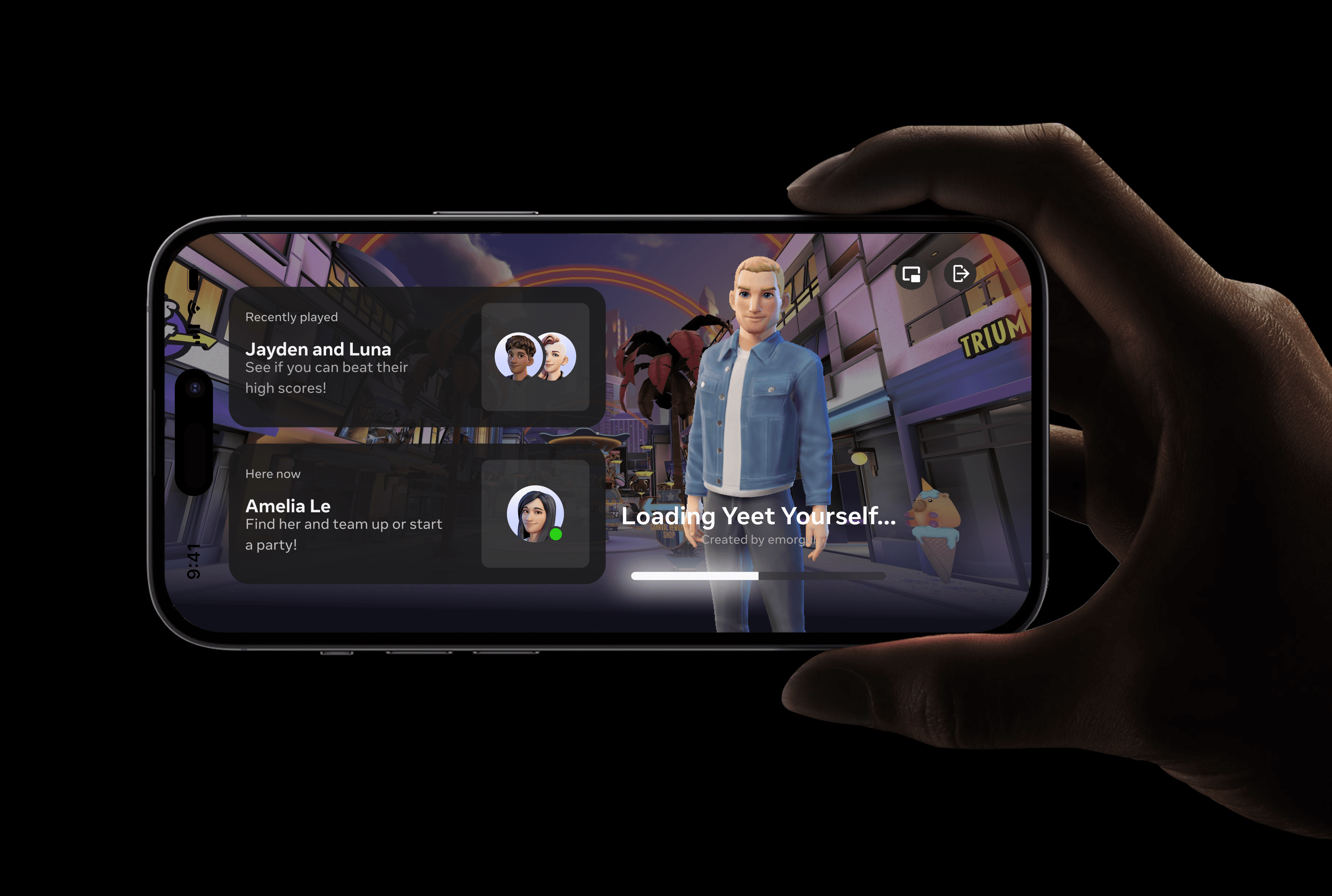
New users need guidance, returning users need social pull. We built adaptive cards (0–4 seconds each) that surface gameplay tips, active quests, leaderboards, or friend invites based on user context and available load time.

Why this worked
Functional value beats passive entertainment at friction points. Ambitious enough to matter, realistic enough to ship.

Learning
Ship the 80% solution. This gave us a clear v1 with real paths for iteration.

Concept
New users need education and guidance. Returning users need social pull and reasons to stay engaged. So we built a system of 0-4 second cards that adapt to user context and available load time—showing gameplay tips, active quests, social proof, leaderboards, and friend invites based on what matters most to each user segment.

Why this worked

Functional value beats passive entertainment value during friction points. This balanced ambitious user impact with realistic engineering constraints. We could ship it, and it would meaningfully improve the experience.


Learning

Ship the 80% solution that works and creates iimpact vs. never ships. This approach gave us a clear v1 with clear paths for iteration.

Curated contextuals cards are personalized based on user context, such as showing friends who are actively playing or recently played to get the user excited to play.
Curated contextuals cards are personalized based on user context— showing friends who are actively playing to get the user excited to play.

ITERATION 3

'Load Runner' Mini Game

Vision
Turn loading into play. Users opt into a quest where they run through a tunnel maze, collecting orbs and power-ups while the world loads behind the scenes. Wait time becomes play time.

Future potential
This concept got the team excited and repositioned the loading screen as a high-priority surface for future roadmaps. Sometimes the best design work isn’t what ships today. It’s a compelling vision that shifts how people think about a problem space.
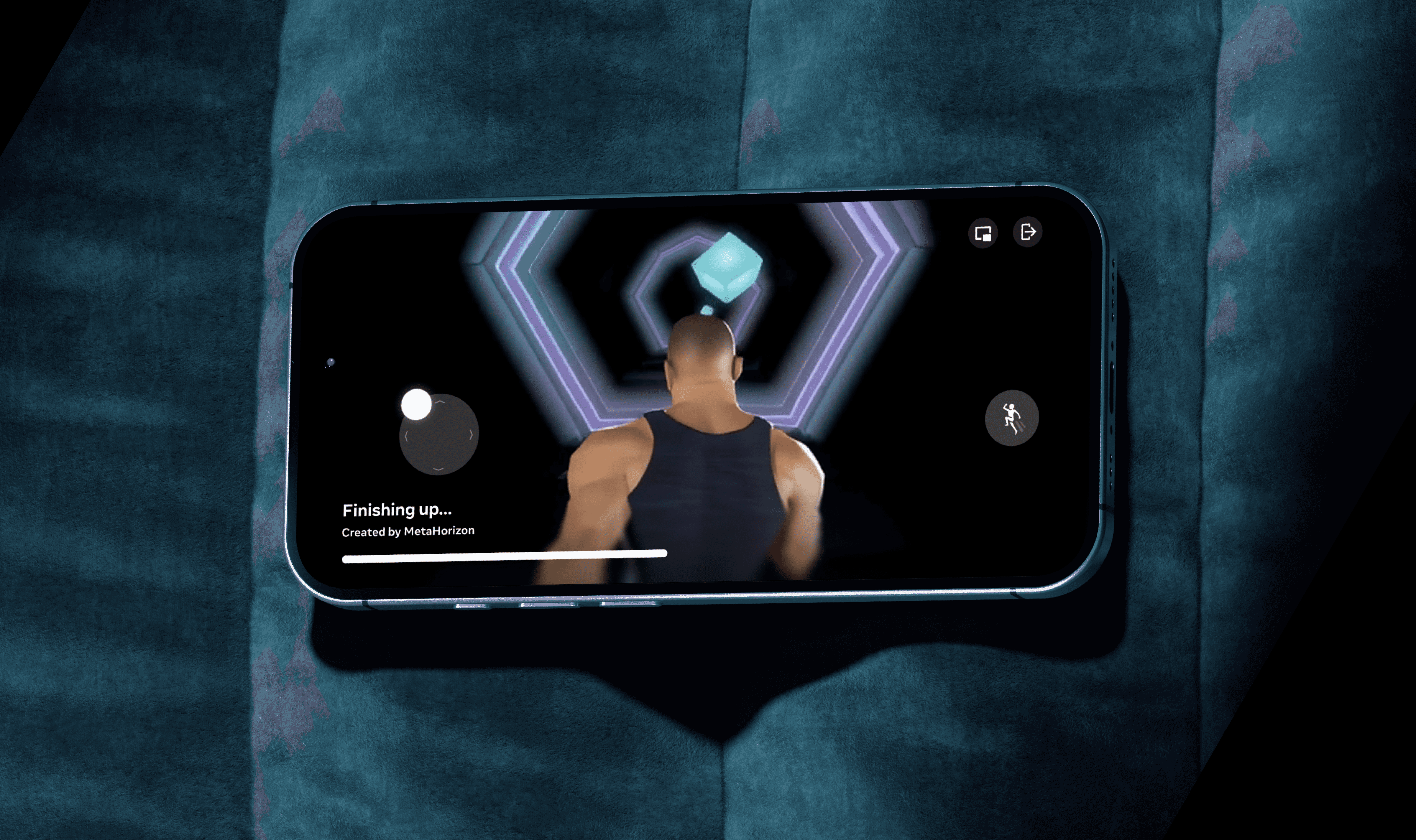

North star vision: Loading mini game that entertains users with a simple tunnel run game using their personal avatar.
Derek Glazier

Let's work
together.

Let's work
together.

Let's work together.

Let's work together.

Let's work
together.

Let's work
together.

Let's work
together.

Let's work
together.